In any industrial caster system, idler wheels (passive wheels) don’t provide driving force—yet they directly affect running stability, noise levels, and service life. As a manufacturer specializing in polyurethane wheel development and production, we’d like to share the performance advantages, applications, and selection tips for polyurethane idler wheels.
What Are Polyurethane Idler Wheels?
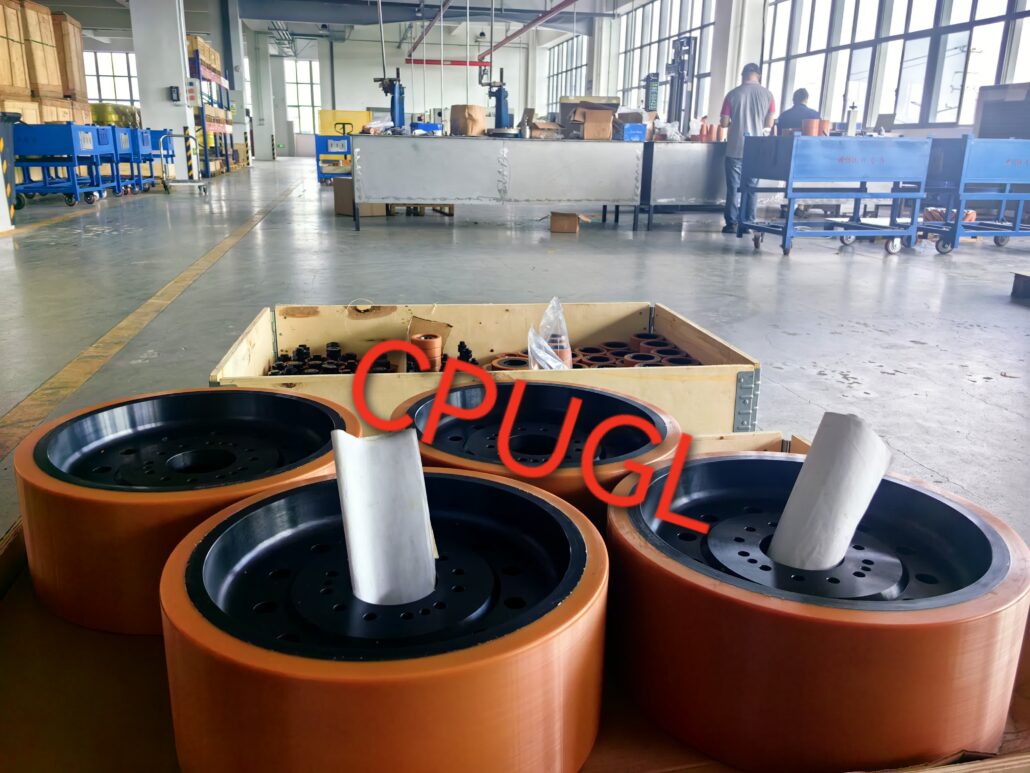
Polyurethane (PU) idler wheels are non-driven wheels made with polyurethane elastomer as the wheel body. They are typically used alongside drive wheels on logistics carts, industrial equipment, medical devices, and warehouse shelving. Polyurethane combines the elasticity of rubber with the rigidity of plastic, giving idler wheels a well-balanced performance in load capacity, wear resistance, shock absorption, and quiet operation.
Key Advantages of Polyurethane Idler Wheels
1. High wear resistance, long service life
Polyurethane significantly outperforms standard rubber and nylon in wear resistance. It resists chipping and cracking under frequent rolling and swiveling, reducing replacement frequency and maintenance costs.
2. Low noise, smooth operation
Polyurethane elastomer offers excellent vibration damping. Idler wheels roll quietly with minimal vibration—ideal for hospitals, laboratories, and electronics workshops where noise control matters.
3. Strong load capacity
By adjusting the PU formula and hardness (commonly Shore A85–A95), we can meet requirements from light to heavy loads, with per-wheel capacities ranging from tens of kilograms to several hundred kilograms.
4. Floor-friendly, non-marking
Polyurethane wheels are gentle on epoxy floors, tiles, and wood flooring, leaving no black marks—perfect for indoor environments where floor protection is important.
5. Oil and chemical resistance
Compared with standard rubber wheels, PU idler wheels offer better resistance to grease and mild acids/alkalis, making them suitable for demanding industrial environments.
Typical Applications
-
Logistics & warehousing: idler wheels for transfer carts, shelving, and roll containers
-
Industrial equipment: casters for cabinets, workbenches, and conveyor systems
-
Medical devices: quiet wheels for hospital beds, carts, and instruments
-
Retail: shopping cart and display rack casters
-
Electronics manufacturing: ESD-safe workshop carts
Selection Guide: Choosing the Right Polyurethane Idler Wheel
-
Load requirements: Select wheel diameter and hardness based on actual per-wheel load, with a safety margin.
-
Floor conditions: Softer PU is preferred for epoxy and tile floors to reduce noise and marks; harder PU suits rough surfaces.
-
Operating environment: For oily or chemical-exposed areas, confirm the PU formula’s resistance performance.
-
Mounting type: Choose flat plate, bolt hole, or stem mounting to match your equipment, and ensure compatibility with drive wheel dimensions.
-
Diameter and width: Larger diameters roll more easily and handle obstacles better; width affects load capacity and floor pressure.
Our Custom Polyurethane Idler Wheel Services
We offer custom manufacturing based on drawings or samples. PU hardness, color, wheel diameter, width, bearing type, and mounting style can all be tailored to your needs. From prototyping to volume production, we provide one-stop service. Every product is tested for load capacity, wear resistance, and rolling performance before shipment.
Contact us today for samples and a quote on polyurethane idler wheels.