In automated conveying, precision winding, packaging machinery, and similar equipment, bearings must not only rotate smoothly but often serve as the direct contact point with the workpiece. Standard metal bearings can scratch product surfaces, and their operating noise may not meet cleanroom requirements. Polyurethane coated bearings—with a polyurethane elastomer layer bonded to the bearing’s outer ring—combine rotational precision with surface protection. This makes them a preferred component in equipment where workpiece protection and quiet operation are critical. This article covers structural features, key advantages, selection criteria, and customization services to support your procurement decisions.
1. What Are Polyurethane Coated Bearings?
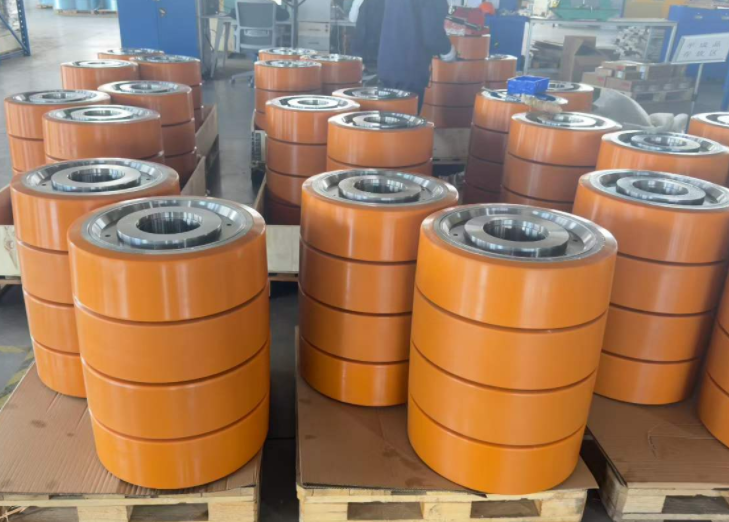
Polyurethane coated bearings are components made by coating the outer ring of a standard rolling bearing (typically a deep groove ball bearing) with a layer of polyurethane (PU) elastomer through casting or molding. The bearing core provides precise rotational support, while the PU coating delivers the required elasticity, friction, and workpiece protection at the contact surface.
Depending on the coating location, common types include outer-ring coated (direct contact with workpieces or conveyor belts) and inner-ring coated (for special mounting or internal cushioning). Core materials include bearing steel and stainless steel. Coating hardness typically ranges from Shore A35 to A95 to meet different traction and cushioning requirements.
2. Key Advantages of Polyurethane Coated Bearings
1. Non-marring workpiece protection
The PU coating provides moderate elasticity, preventing scratches or indentations that metal contact would cause. This is especially critical when conveying precision circuit boards in electronics manufacturing, contacting high-gloss surfaces in glass handling, or guiding yarn in textile machinery.
2. Low noise and smooth operation
Polyurethane offers excellent vibration damping and noise reduction. The coating absorbs vibration and noise generated during bearing rotation and workpiece contact. For hospitals, laboratories, and electronics workshops with noise requirements, PU coated bearings offer clear advantages over metal rollers.
3. Good wear resistance and long service life
Polyurethane significantly outperforms standard rubber in wear resistance. In applications involving continuous contact and friction, such as winding machine tensioning mechanisms, the PU coating maintains long service life and reduces replacement frequency.
4. Adjustable friction for both traction and slip resistance
By adjusting the PU formula and hardness, different surface friction levels can be achieved. Softer formulations provide traction when needed; harder formulations offer low-friction smoothness. This flexibility allows the same bearing size to serve various drive requirements.
5. Shock absorption and equipment protection
The elastic coating absorbs impact and vibration during operation, reducing stress on the bearing core and adjacent structures, helping extend the life of the entire drive system.
3. Typical Applications
-
Automated conveying equipment: SMT placement machines and electronics assembly lines conveying precision circuit boards, with the coating preventing scratches
-
Winding machine tensioning mechanisms: PU wear resistance with selectable hardness to match different pressure requirements
-
Packaging machinery: flexible clamping and feeding of films and cartons, improving friction to prevent slipping
-
Textile machinery: yarn conveying with grip while avoiding material damage
-
Door, window, and furniture hardware: rollers and guide wheels with low noise and smooth operation
-
Glass and ceramic handling: preventing scratches on high-gloss or brittle surfaces
4. Selection Guide for Polyurethane Coated Bearings
1. Hardness selection
Hardness directly affects traction, cushioning, and workpiece protection. Softer polyurethane (Shore A50–70) suits fragile workpiece conveying and applications requiring larger contact areas. Harder formulations (Shore A85–95) suit higher loads or low rolling resistance requirements. Note that PU hardness tolerance is typically around Shore ±5°.
2. Bearing core type and precision
Bearing precision grade (P0, P5, P6) affects rotational smoothness. Higher precision grades are recommended for precision conveying applications. Seal type (open, metal shield, rubber seal) should be determined based on dust protection and grease retention requirements.
3. Coating thickness and uniformity
Coating thickness affects cushioning capability and external dimensions. Too thin provides insufficient cushioning; too thick may affect installation space. Coating uniformity and bond strength to the bearing outer ring directly affect service life—poor bonding can lead to coating separation.
4. Operating environment
Prolonged use of polyurethane in humid environments can cause hydrolysis degradation, manifesting as surface stickiness, hardness reduction, and even cracking. For high-humidity applications, evaluate hydrolysis-resistant formulations or consider alternative coating materials such as silicone. For oily or chemical-exposed environments, confirm the PU formula’s resistance performance.
5. Mounting method
Select the appropriate configuration based on equipment structure: outer-ring coated for direct workpiece contact, screw-mounted, or shaft-mounted. Mounting dimensions must precisely match equipment interfaces.